

On December 18, U.S. President Donald Trump issued an executive order instructing federal agencies to reclassify marijuana, thereby relaxing longstanding restrictions on the substance and representing the most significant change in U.S. cannabis policy in over fifty years.
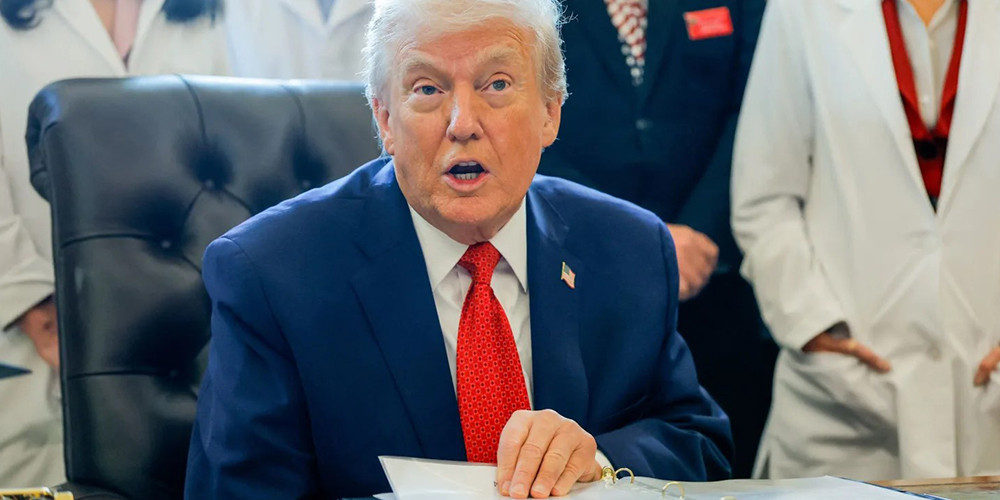
During a ceremony at the Oval Office on Thursday, flanked by medical professionals, President Trump announced the decision. “Today I’m pleased to announce that I will be signing an executive order to reschedule marijuana from a Schedule I to a Schedule III controlled substance, with legitimate medical uses,” he said. “We have people begging for me to do this—people who are in great pain.”
He added that the issue had drawn overwhelming public support. “I think I probably have received more phone calls on this, on doing what we’re doing—I don’t think I received any calls on the other side of it,” Trump said.
The executive order directs the attorney general to “take all necessary steps to complete the rulemaking process” to reclassify marijuana from a Schedule I drug to a Schedule III drug “in the most expeditious manner.”
According to the Drug Enforcement Administration, Schedule I substances are defined as having “no currently accepted medical use and a high potential for abuse,” making it the agency’s most restrictive category. In addition to marijuana, this classification includes heroin, LSD, and ecstasy.
By contrast, Schedule III is reserved for substances with “a moderate to low potential for physical and psychological dependence.” Drugs in this category include Tylenol with codeine, testosterone, anabolic steroids, and ketamine.
Also on Thursday, senior White House officials said the Centers for Medicare and Medicaid Services, overseen by Dr. Mehmet Oz, is expected to roll out a pilot program in April allowing certain Medicare-eligible seniors to receive free CBD products recommended by physicians. These products must meet all applicable state and local quality and safety regulations, be sourced from legally compliant producers, and undergo independent third-party testing for CBD content and contaminants.
“Millions of registered patients across the United States, many of them veterans, rely on cannabis for relief from chronic and debilitating symptoms. We commend the administration for taking this historic step. This is only the beginning,” Ben Kovler, founder and CEO of Green Thumb, said in a statement to CNBC.

Reclassifying marijuana as a Schedule III substance would deliver an immediate and substantial boost to scientific and medical research. Schedule I imposes the most stringent regulatory hurdles, including stricter DEA registration requirements, limited access to research materials, and lengthy approval processes that significantly delay or discourage studies. Shifting marijuana to Schedule III would reduce these obstacles, enabling researchers to obtain materials more efficiently and conduct clinical trials under a regulatory framework similar to other controlled substances with recognized medical value and lower abuse risk.
As a Schedule III drug, marijuana would present significantly fewer barriers for researchers entering the field. This development could also affect state and federal initiatives related to the legalization of marijuana for medical or recreational purposes. At present, most states have legalized marijuana in some form for medical use, while a smaller number have extended legalization to recreational use.
- The news is soured from CNBC and CBS News
Post time: Dec-25-2025