

Virginia House lawmakers have approved a bill aimed at legalizing and regulating recreational marijuana sales, marking one of several cannabis reform measures under consideration during the 2026 legislative session.
After companion versions of the proposal cleared a House subcommittee and a Senate committee, the House General Laws Committee voted 19–2 on January 27 to advance the bill sponsored by Del. Paul Krizek (D). The measure now moves to the Appropriations Committee and could later be considered by the full House.
Filed by Delegate Krizek, the measure serves as the House counterpart to Senate Bill 542. The Senate proposal would direct the Virginia Cannabis Control Authority to begin developing a comprehensive licensing framework governing the cultivation, processing, testing, and retail distribution of marijuana. Some time earlier, the Senate version advanced through the Senate Rehabilitation and Social Services Committee.
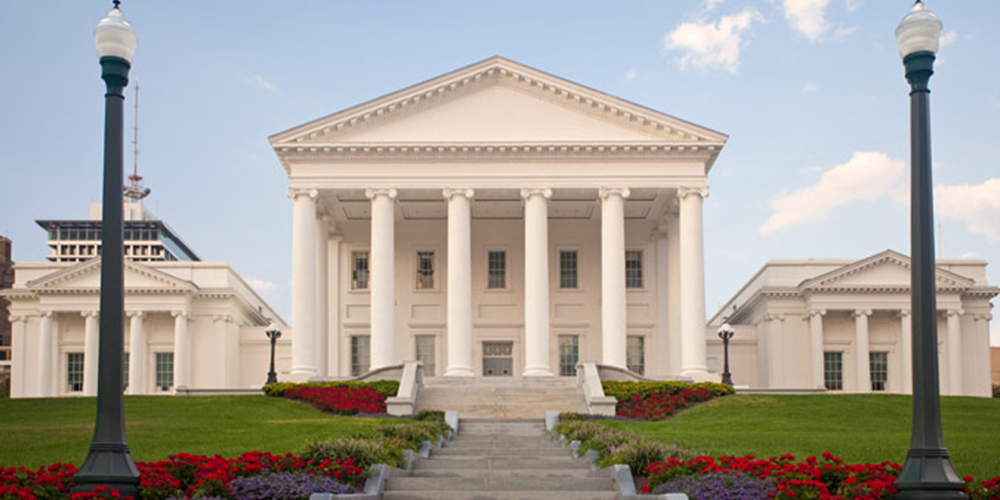
Virginia legalized adult possession and home cultivation of marijuana in 2021, but a regulated retail market has not yet been implemented. House Bill 642 seeks to address that gap by establishing a formal pathway for commercial marijuana sales statewide. Under the proposal, the Cannabis Control Authority would be responsible for constructing the licensing system, with applications permitted on or after July 1, 2026.
Key provisions of the Virginia marijuana sales legalization legislation include the following:
• Retail sales could begin on November 1, 2026 under the House version and January 1, 2027 under the Senate bill.
• Adults would be able to purchase up to 2.5 ounces of marijuana in a single transaction, or up to an equivalent amount of other cannabis products as determined by regulators.
• The Virginia Cannabis Control Authority would oversee licensing and regulation of the new industry. Its board of directors would have the authority to control possession, sale, transportation, distribution, delivery and testing of marijuana.
• A tax of up to 12.625 percent would apply to the retail sale of any cannabis product. That would include a state retail and use tax of 1.125 percent on top of a new marijuana-specific tax of 8 percent. Local governments could levy an additional 3.5 percent.
• Tax revenue would be split between the costs of administering and enforcing the state’s marijuana system, a new Cannabis Equity Reinvestment Fund, pre-kindergarten programs, substance use disorder prevention and treatment programs and public health programs such as awareness campaigns designed to prevent drug-impaired driving and discourage underage consumption.
• Local governments could not opt out of allowing marijuana businesses to operate in their area.
• Delivery services would be allowed.
• Serving sizes would be capped at 10 milligrams THC, with no more than 100 mg THC per package.
• Existing medical cannabis operators could enter the adult-use market if they pay a $10 million licensing conversion fee.
• Cannabis businesses would have to establish labor peace agreements with workers.
• A legislative commission would be directed to study adding on-site consumption licenses and microbusiness cannabis event permits that would allow licensees to conduct sales at venues like farmers markets or pop-up locations. It would also investigate the possibility of the Virginia Alcoholic Beverage Control Authority becoming involved in marijuana regulations and enforcement.
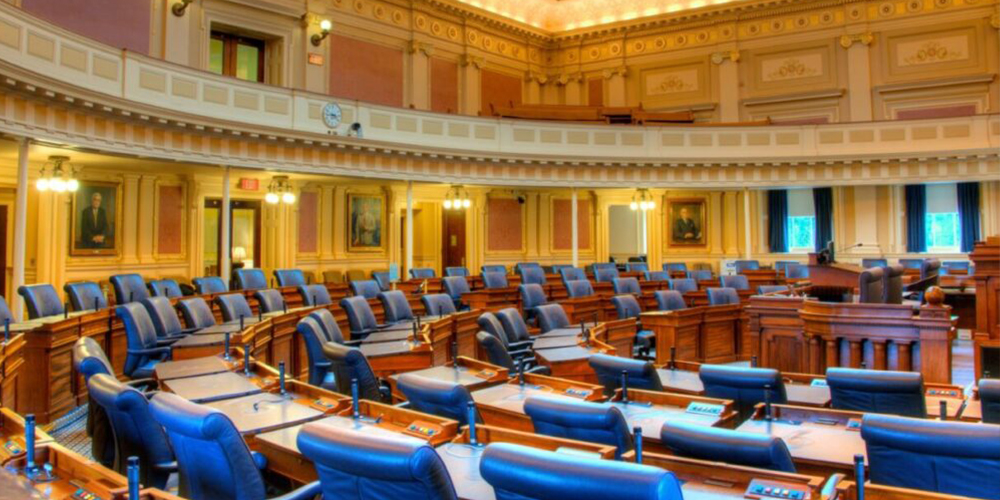
With the committee’s 19–2 vote, the House proposal now advances alongside Senate Bill 542, positioning both chambers to continue deliberations over how Virginia transitions from a possession-only legalization framework to a fully regulated recreational marijuana market.
- The news is soured from Marijuana Moment
Post time: Feb-05-2026